//////// RESIDENCY
___Finders Keepers_page3
Recently, University of Barbaria has introduced a new Masters Program “hypo-critical studies”, as a supplement to their visual studies program. As is common in Asia, words from the West, specifically English ones are often mispronounced and misspelled, so the department misspelled the word hypercritical to read as hypocritical, since ‘o‘ and ‘er‘ cannot be distinguished within the dialects of the region. This in turn, brought many hyper-critical pedagogues from the West, funded by their not-for-economic-butfor-cultural-profit agencies whose mission was the trinity, promoting greater justice, peace, and reconciliation to the Barbaric world. Many wordsmiths entrenched in traditional and modern pedagogies, disguised to be neutral transmittors of knowledge, came as invited lecturers to bring messages of emancipation toward equality, The fatal error was that in the country of the blind, everyone was already equally blind. The invited theorists had equality as their goal, but that meant inequality had to be instated as a point of departure in order for their “equal“ pedagogical system to function. True ignorance, or true blindness in this case, is one that ignores the societal presupposition of inequality that serves as ideological abutments promoting an infinite divide between those that are supposed to know vs. those that do not know.
The “ignorance“ in the “ignorant schoolmaster“ is not an artificial stupidity often practiced by those of us engaged in the business of intellectualism. The fatal mistake of any pedagogue is to operate under the delusions of false modesty, hoping to create an atmosphere of pedagogical horizontality but only breeding higher verticality within knowledge transmission. Many of us academics, having read, in youthful ardor, books about resistance and radical knowledge; having bought, in middle aged zeal for home decoration, more books about radicality to put on the shelves in our personal libraries, often bemoan the lack of criticality in our students and despise those that can‘t twirl with ease the latest theoretical nomenclature.
Speaking of nomenclature, the abundant production of books that have in their titles, “Ideology”, “Criticism”, “Theory“ and “Marxism“ has out supplied the demand, rendering many of these tomes to lie idly in the remainders bin, and after several years of gathering dust, get dumped onto non-existent places such as Twomen to be used at free will by the local communities. Now, in Twomen, where resources are limited, every item is used and reused until point of no return. For example, newspapers are printed, read, and then cut into small squares to be used as toilet paper. There was a scandal in 2001. The janitorial company in charge of maintaining the University grounds misplaced the sacred imported critical theory books from the West, with the local almanac of public opinion. This “mistake“ had been going on for over a decade, and when it was finally discovered by the local authorities, the head of the janitorial company was sentenced to twelve years of recopying by hand, theoretical texts that were now flushed down the drain. An interesting outcome of this misdemeanor is the growing number of blind students fluent in theory-speak, because many had memorized volumes of Baudrillard, Derrida, Jameson, etc, while crouched to defecate. And many are now passing on this knowledge, both in oral, textual, and tactile reproductions.
What lies ahead for our students in the hypo-critical studies program at the University of Barbaria? While our development has been circuitous at best, I am confident that detours and hiccups in learning are best filters for learning to think, and to walk, even if hesitantly on the path to truth.
There is a quiet radiance associated in my mind with the name University of Barbaria—because the students have preserved the spirit of those original founding principles—Virtus, Veritas, Integratus, and Globus. There may be contradictions and omissions in those principles, there may be individuals in the University who do not live up to the highest Western standards, but there are incongruities in every institution, since no institution and no social system can guarantee the perfection of all its members. The half blind, ignorant students of the University of Barbaria have hope, because they still have in sight qualities of earnestness—dedication—and a sense of honor. Honor is self-esteem made visible in action, and although many have troubles seeing, it does not mean they are incapable of asking “what is to be done“ and answering that question in action. Action, what is seriously lacking among my colleagues and other distinguished wordsmiths.
I conclude with a word of reminder to those of us that ask “What is to be Done“ because it is a question that is forever radically chic, but have lost its true meaning in the question because we have be desensitized through blind repetition. We who have been spread out in intellectual lawn chairs like bovines with water retention problem, it is time to see the changing faces and participants of anthropological pedagogy, and stop the smug rejection of the unfamiliar.
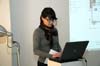
Where does this vitriolic pontification from a disgruntled linguistic anthropologist take us tonight? I would like to end this lecture with a tired old joke that our Dean at the University of Barbaria tells repeatedly, to herself and to others, chuckling always as if hearing the joke for the first time in telling: “I see“ said the blind man to his deaf wife. Thank you very much for your patient attention today.